Launching a new stay.
Before there was a stay to show.
I led the pre-launch experience for MAANA Annex: the website, waitlist and raffle journey, audience research and pricing recommendations. The challenge was to start building an audience while the property was still taking shape.

The building wasn’t ready.
The conversation had to begin.
across existing properties
in the 3 August 2026 snapshot
with Kyoto as the initial benchmark
Give people a reason to care
before asking them to join.
When I began, the foundations had not been laid. We needed to collect interest before we had a finished property to photograph. That made the launch a question of credibility as much as visual design.
I organised the website around what we could make concrete: MAANA’s existing story, the reuse of earthen walls from its Atelier, the collaboration with Norm Architects and Keiji Ashizawa Design, and the progress toward opening. The page could develop as new material became available.
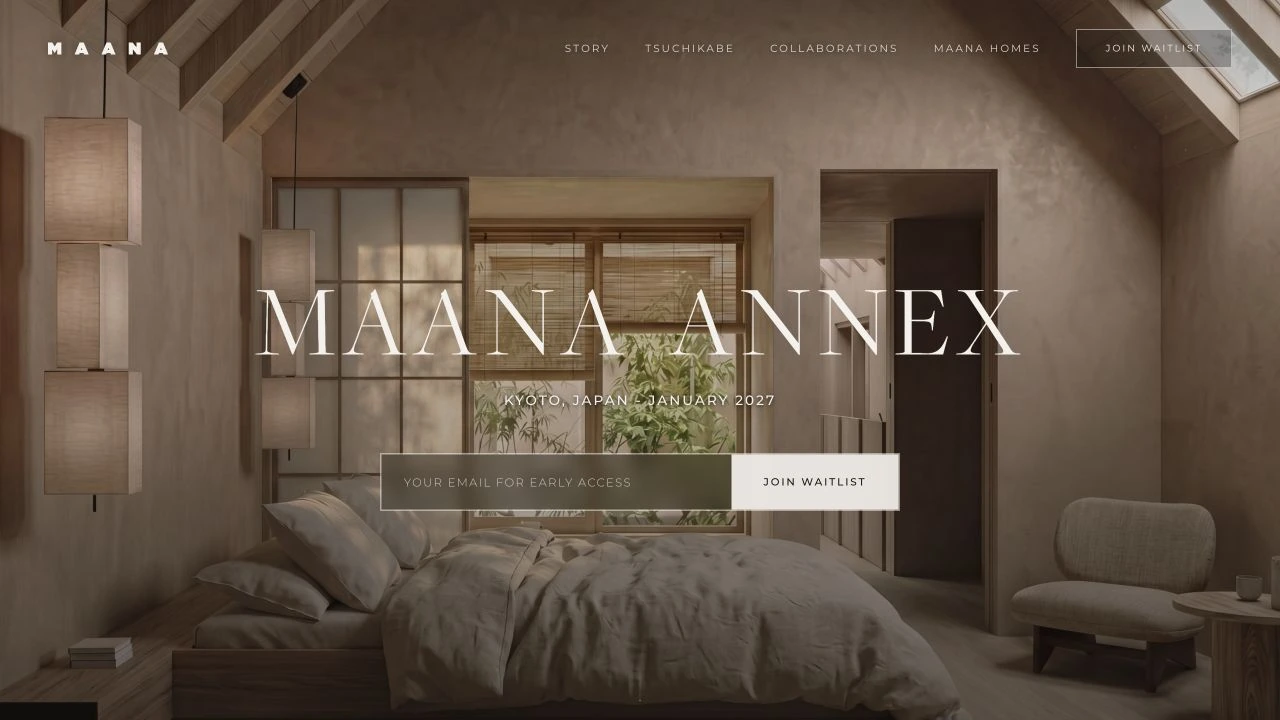
Connect the story to one clear next step.
The waitlist gives interested visitors a way to stay close to the project. A signup appears at the top for people already convinced, and again after the story for those who need more context.
Teasers and moments from the process.
The project story and one shared signup destination.
Deeper stories and early access for subscribers.
I planned the connection between channels and the collection logic. Newsletter content adjustments were handled by a copywriter.
A small first step.
A deeper invitation.
I separated joining the waitlist from entering the raffle. An email was enough to stay informed; people who wanted to take part in the raffle could then share their name, industry and a note. Skipping that second step still left them on the waitlist.
This gave us a way to collect richer audience information without making every visitor complete the longer form.
One audience, two levels of participation
Share a little more
Name · industry · note
waitlist + raffleStay on the list
No more information required
waitlistRaffle participation is a tag within the audience. Existing MAANA newsletter membership is preserved.
Flow redrawn from the launch plan and signup specification. This portfolio diagram does not collect personal information.
Who already books with us?
Who is curious about Annex?
I used existing booking behaviour and new expressions of interest for different purposes. Paid bookings helped establish how people used and bought MAANA’s properties. Waitlist responses provided samples for persona development and a view of who was drawn to Annex before opening.
Party size, property, season, booking channel and lead time across existing stays.
Relationship to MAANA, industry and volunteered context from the Annex list.
Different homes attracted different parties.
booked for two people
A strong couples segment
booked for three or more
More small-group stays
booked for four to five
A larger-party reference
Selected party-size findings from the property analysis, prepared 27 August 2026. Data covers paid, confirmed bookings made January 2025–August 2026, with complimentary, blocked and test stays excluded and duplicates removed.
For Annex, I organised subscriber responses by their existing relationship with MAANA and their industry. The sample included previous guests, people who had followed the brand from a distance, and people discovering it for the first time. This gave persona development more context than a total signup count alone.
How subscribers knew MAANA
Counts classified from subscriber responses. The last group combines 31 email-only entries and 6 unclear answers. Relationships are self-reported. Raffle participation may influence who responds, so this is a sample of interest, not a measure of willingness to pay.
Use the existing business
to ground the new one.
I compared the properties’ realised nightly rates, party sizes and seasonal patterns to develop pricing inputs for Annex. With a January opening planned, the winter baseline mattered alongside the higher rates achieved in spring and autumn.
The team adopted the persona and pricing recommendations. Kyoto became the initial pricing benchmark for Annex.
The opening season changes the reference.
Historical Kyoto ADR, tax excluded, rounded to the nearest ¥1,000. Seasons are based on check-in date. These are reference-property figures, not published Annex rates.
Start with Kyoto as the benchmark.
The analysis gave the team an existing property and seasonal context to work from when setting Annex’s initial price. The effect on bookings and revenue will become measurable once the property begins taking paid stays.
A working launch journey.
A clearer picture of the audience.
Website & signup system
A live destination connecting the project story, waitlist, optional raffle and subscriber collection.
An initial audience sample
107 external subscribers by 3 August, including 76 raffle participants, with responses organised for persona research.
Personas & pricing inputs
Research used in launch decisions, with Kyoto as the starting pricing reference.
The work connected making the project understandable with learning about its future guests. The next evaluation is how that early interest develops into paid bookings, and how actual guests compare with the personas used for launch.
My contribution: pre-launch strategy, website and signup design, subscriber collection/reporting logic, audience analysis and pricing recommendations. Newsletter content adjustments were handled by a copywriter. Early audience figures are a dated snapshot; booking and revenue outcomes are not yet reported.
Explore the live Annex website